
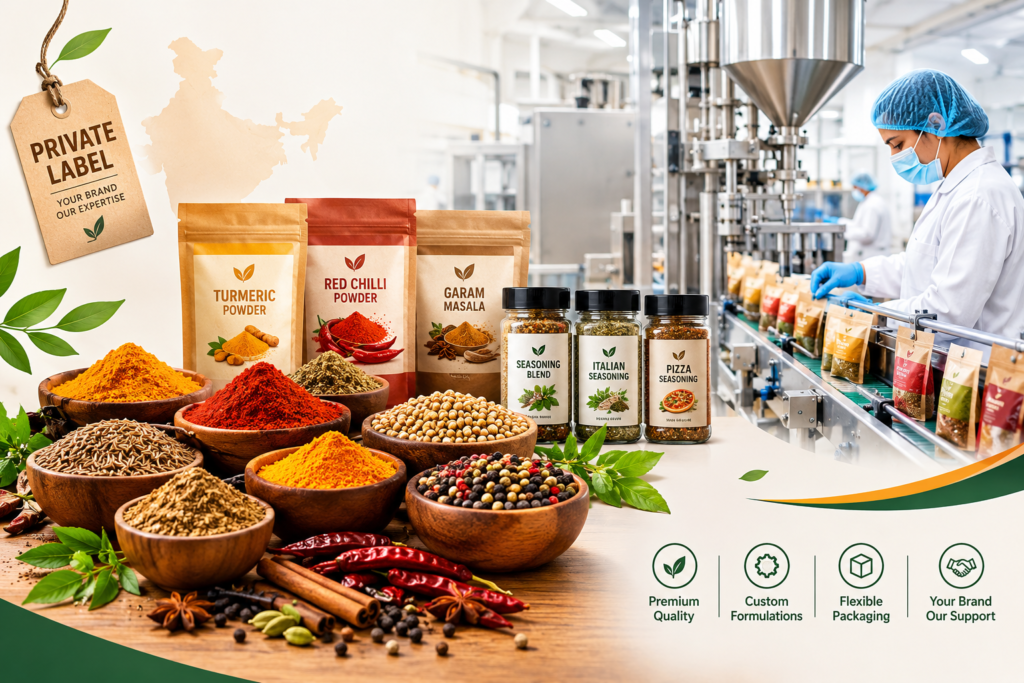
India is one of the world’s leading producers of spices, offering a wide variety of aromatic herbs, traditional spices, and seasoning blends for domestic and international markets. With increasing demand for convenient cooking solutions, ready-to-use spice mixes, and customized food products, spice manufacturing has become an attractive opportunity for businesses looking to build their own brands.
Private label manufacturing allows businesses to launch spice and seasoning products under their own brand name without establishing their own manufacturing facility. By partnering with an experienced manufacturing company, businesses can focus on branding, marketing, packaging, and distribution while relying on professional manufacturing expertise.
This guide explains the spice and seasoning manufacturing process, private label opportunities, quality considerations, and how businesses can develop their own spice brands in India.
Understanding Spice and Seasoning Manufacturing
Spice manufacturing involves sourcing, processing, grinding, blending, and packaging spices for commercial use. Common products include turmeric powder, red chilli powder, coriander powder, cumin powder, black pepper powder, garam masala, and other traditional Indian spice blends.
Seasoning manufacturing focuses on creating customized blends that enhance the flavour, aroma, and taste of food products. These products are widely used in snacks, instant foods, ready-to-cook meals, restaurants, and food processing industries.
A professional Spice Manufacturer in India can help businesses develop different product varieties according to their target market, flavour preferences, and packaging requirements. Manufacturers may also offer customized formulations for retail brands, food service businesses, distributors, and other commercial customers.
Why Choose a Spice Manufacturer in India?
India’s rich agricultural resources, established spice supply chains, and traditional knowledge of spice processing make it an important destination for spice manufacturing. Businesses can explore a broad selection of raw materials and product categories for their private label brands.
Working with an experienced manufacturer offers several advantages:
- Product variety: Develop individual spice powders, blended masalas, and specialty spice products.
- Manufacturing expertise: Benefit from established processing, blending, and packaging capabilities.
- Brand customization: Create products with your preferred formulations, packaging styles, and brand identity.
- Scalable production: Choose manufacturing quantities according to business requirements and market demand.
- Market opportunities: Supply products to supermarkets, online marketplaces, retailers, restaurants, and distributors.
Selecting the right manufacturing partner is essential for maintaining product consistency, meeting applicable food safety requirements, and building long-term customer trust.
What Is a Seasoning Manufacturer in India?
A Seasoning Manufacturer in India produces flavouring blends designed for specific food applications. Unlike single-ingredient spice powders, seasonings can combine spices, herbs, salt, and other permitted ingredients to achieve a distinctive taste profile.
Popular seasoning products include peri-peri seasoning, pizza seasoning, pasta seasoning, barbecue seasoning, tandoori seasoning, and seasoning blends for chips and snacks.
Food brands can collaborate with manufacturers to develop customized seasoning blends based on their recipes, flavour preferences, intended applications, and target consumers.
For example, a snack brand may require a tangy and spicy seasoning, while a restaurant supplier may need a consistent blend for fries, grilled vegetables, or marinades. Product development should consider ingredient compatibility, flavour stability, applicable food regulations, and packaging requirements.
Private Label Spice Manufacturer: Build Your Own Brand
A Private Label Spice Manufacturer enables businesses to sell spice products under their own brand without investing in an independent manufacturing plant. This model is suitable for entrepreneurs, established food businesses, retailers, wholesalers, and e-commerce sellers.
Private label manufacturing generally involves the following steps:
- Product selection: Choose the spice powders, masalas, or seasoning blends you want to sell.
- Formula development: Select an existing formulation or discuss customized product development with the manufacturer.
- Packaging selection: Decide on pouches, jars, bottles, or other suitable food-grade packaging formats.
- Branding and labelling: Develop your logo, product design, ingredient declaration, and required label information.
- Manufacturing and quality checks: Products are processed, packed, and inspected according to agreed specifications.
- Distribution and marketing: Launch your products through retail stores, distributors, online platforms, or your own website.
Before finalizing a manufacturing partner, evaluate minimum order quantities, production capacity, quality assurance procedures, lead times, pricing, and customization options. Businesses should also confirm that packaging and labelling comply with applicable Indian food safety regulations.
Choosing a Premium Quality Spice Products Manufacture Company
Finding a premium quality Spice products manufacture company is an important step in building a successful private label brand. Product quality directly influences flavour consistency, customer satisfaction, repeat purchases, and brand reputation.
Consider the following factors when evaluating a manufacturing company:
- Raw material sourcing: Check how spices are selected, sourced, and inspected.
- Processing standards: Understand the grinding, blending, handling, and packaging processes.
- Quality testing: Ask about relevant testing for purity, moisture, microbiological safety, and contaminants.
- Consistency: Ensure that products maintain the agreed flavour, aroma, texture, and specifications across batches.
- Regulatory compliance: Verify applicable FSSAI licensing and other required registrations or certifications.
- Packaging quality: Select packaging that protects products from moisture, contamination, and loss of aroma.
A reliable partner should communicate clearly about specifications, documentation, production schedules, and quality control. Requesting product samples before placing a commercial order can help assess whether the products meet your expectations.
Opportunities for Private Label Food and Supplement Brands
The private label model also creates opportunities for businesses operating in related product categories. For example, companies searching for a private label nutritional supplement manufacturer may be interested in expanding into complementary product lines, including herbal powders, botanical ingredients, and other permitted nutritional products.
However, spices and nutritional supplements are different product categories with distinct formulation, manufacturing, labelling, and regulatory requirements. Businesses should select manufacturers with the appropriate facilities, licences, and expertise for each category rather than assuming that every spice manufacturer can produce supplements.
Careful product planning can help businesses diversify their portfolios while maintaining suitable quality and compliance standards.
Conclusion
Spice and seasoning manufacturing in India offers promising opportunities for businesses seeking to establish or expand their own food brands. From traditional spice powders to customized seasoning blends, private label manufacturing provides a practical way to introduce differentiated products without building an independent manufacturing facility.
By choosing an experienced manufacturing partner, prioritizing product quality, selecting suitable packaging, and developing a clear marketing strategy, businesses can create a strong foundation for long-term growth. Whether you are launching your first spice brand or expanding an existing product portfolio, researching manufacturing capabilities and validating product quality are essential steps toward building a competitive private label business in India.