
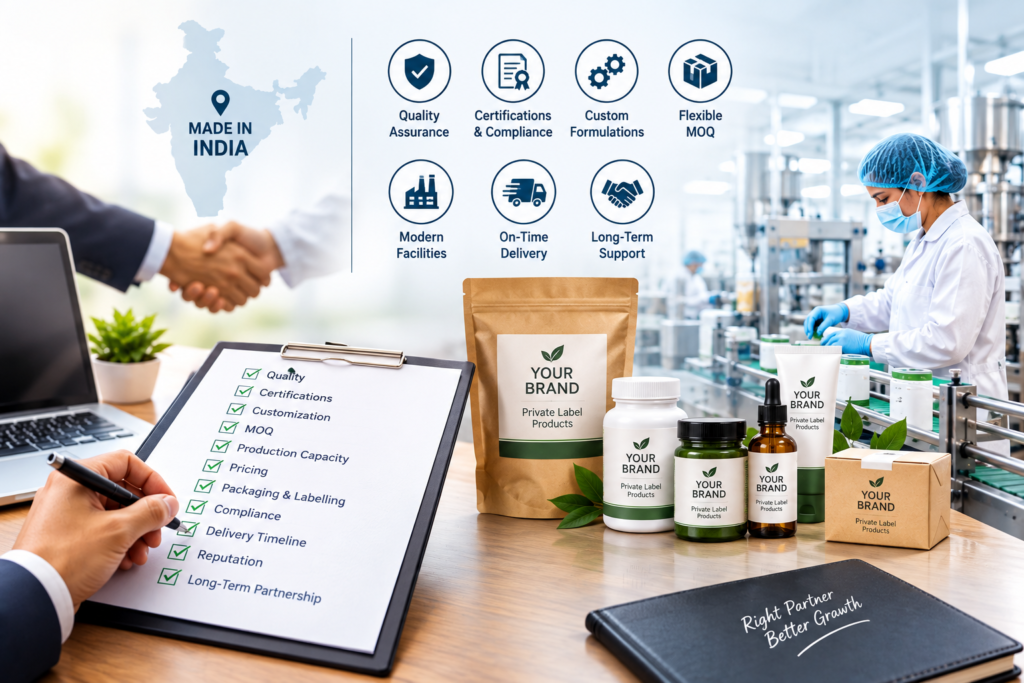
Starting your own product brand has become more accessible with the growth of private label manufacturing in India. From nutritional supplements and personal care products to cosmetics, food products, and household essentials, businesses can launch products under their own brand name without investing in their own manufacturing facilities.
However, choosing the right manufacturing partner is one of the most important decisions for any business. Product quality, pricing, production capacity, regulatory compliance, and delivery timelines can directly influence your brand’s reputation and profitability.
Whether you are a startup, retailer, distributor, or established business, this guide explains 15 essential factors to check before selecting a private label manufacturer in India.
What Is Private Label Manufacturing?
Private label manufacturing is a business model in which a manufacturer produces products that another company sells under its own brand name. Depending on the agreement, the manufacturer may provide product formulation, sourcing, production, packaging, labelling, and quality testing.
The Private Label Manufacturer in India model is particularly useful for businesses that want to enter a market without establishing their own factory. It allows brand owners to focus on marketing, customer acquisition, sales, and distribution while working with an experienced production partner.
15 Things to Check Before Choosing a Private Label Manufacturer
1. Industry Experience
Check how long the manufacturer has been operating and whether it has experience in your specific product category. A manufacturer familiar with your industry is more likely to understand product requirements, market expectations, and production challenges.
2. Product Quality Standards
Quality should be a top priority when evaluating manufacturing partners. Ask about raw material inspection, production controls, finished product testing, and batch consistency. Request samples before confirming a commercial order.
3. Licences and Certifications
Verify the licences and certifications relevant to your product category. For food and nutritional supplements in India, check applicable FSSAI requirements. Cosmetics and personal care products may require different regulatory approvals. Confirm that the manufacturer meets all applicable legal requirements.
4. Product Customization Options
Your products should reflect your brand identity and target audience. Ask whether the manufacturer supports customized formulations, ingredients, fragrances, flavours, product specifications, and packaging options.
5. Minimum Order Quantity (MOQ)
Minimum order quantity affects your initial investment and inventory management. Startups may prefer manufacturers offering smaller production runs, while established brands may require larger volumes. Confirm MOQ requirements for each product and packaging format before proceeding.
6. Manufacturing Capacity
Assess whether the manufacturer can handle your current order volume and support future business growth. Ask about production capacity, equipment, workforce, and the ability to manage seasonal demand or bulk orders.
7. Transparent Pricing
Request a detailed quotation covering manufacturing, raw materials, packaging, labelling, testing, and other applicable charges. Compare quotations carefully instead of selecting a supplier based only on the lowest price.
8. Packaging and Labelling Support
Packaging protects products and helps establish brand recognition. Choose a manufacturer that can support suitable packaging materials, product labels, and brand-specific designs. Ensure that mandatory declarations and claims comply with applicable regulations.
9. Research and Development Capabilities
If you need a differentiated product, ask whether the manufacturer provides formulation development, product trials, stability evaluation, or other relevant research and development services. These capabilities can help your brand develop products suited to its target market.
10. Regulatory Compliance
Regulatory compliance is essential for building a reliable business. Ask how the manufacturer handles product documentation, ingredient declarations, labelling requirements, batch records, and applicable quality standards. Requirements vary depending on the product category, so verify them before launching.
11. Production Lead Time
Delayed deliveries can affect sales, marketing campaigns, and distributor relationships. Confirm production timelines, packaging approval schedules, dispatch procedures, and how the manufacturer handles unexpected delays.
12. Supply Chain Reliability
A dependable manufacturer should have a practical sourcing and inventory management process. Ask how it manages raw material availability, supplier selection, and potential shortages to minimize interruptions in production.
13. Contract and Confidentiality Terms
Review the manufacturing agreement before placing an order. It should clearly define pricing, payment terms, delivery schedules, product specifications, quality responsibilities, ownership of custom formulations, and confidentiality obligations.
Working with a Contract Manufacturer in India may involve more detailed agreements when the manufacturer produces goods according to your specifications. Clear contractual terms can help prevent misunderstandings and protect both parties.
14. Reputation and Client References
Research the manufacturer’s background, customer reviews, business history, and previous projects. Where possible, request references from existing clients or examples of products it has manufactured. Evaluate its communication, reliability, and ability to resolve quality issues.
15. Scalability and Long-Term Partnership
Your manufacturing requirements may change as your brand grows. Choose a partner capable of supporting additional product variants, higher order volumes, improved packaging, and new market opportunities. A long-term manufacturing relationship can help improve operational efficiency and maintain product consistency.
How to Find the Right Supplement Manufacturing Partner
Businesses entering the health and wellness market should apply additional checks when comparing the top private label supplement manufacturers India has to offer. Evaluate their experience with your specific supplement category, ingredient sourcing, testing procedures, production facilities, and regulatory compliance.
When comparing a private label nutritional supplement manufacturer, confirm that it has the appropriate licences and capabilities for the intended product. Ask about ingredient specifications, contaminant testing, batch traceability, and documentation supporting product quality.
You can also compare multiple private label supplement companies India offers by requesting samples, quotations, production timelines, and details of customization services. Make sure the manufacturer can support your target formulation and packaging requirements before making a final decision.
Conclusion
Choosing the right private label manufacturing partner requires careful research and a clear understanding of your business goals. By evaluating these 15 factors, you can make a more informed decision about product quality, costs, compliance, production reliability, and long-term growth potential.
The success of Private Label Manufacturing India depends not only on finding a manufacturer but also on building a strong working relationship with a company that understands your product requirements and business objectives. Before signing an agreement, compare multiple manufacturers, review their documentation, evaluate product samples, and clarify all commercial terms. A reliable manufacturing partner can help you launch confidently, serve your customers consistently, and build a sustainable brand in the Indian market.